


SDT ULTRASOUND – T-SONIC1
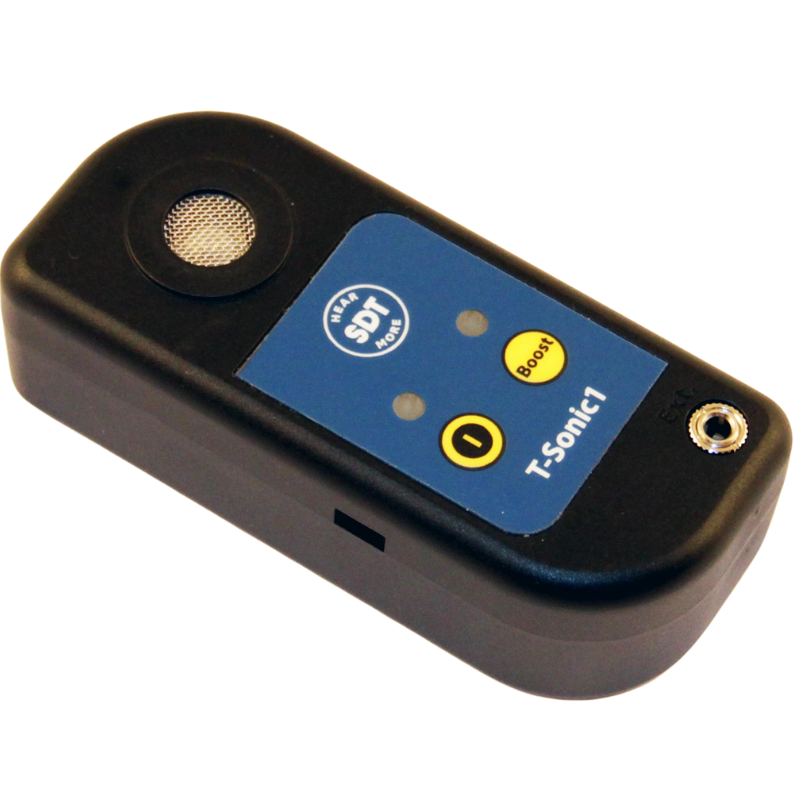
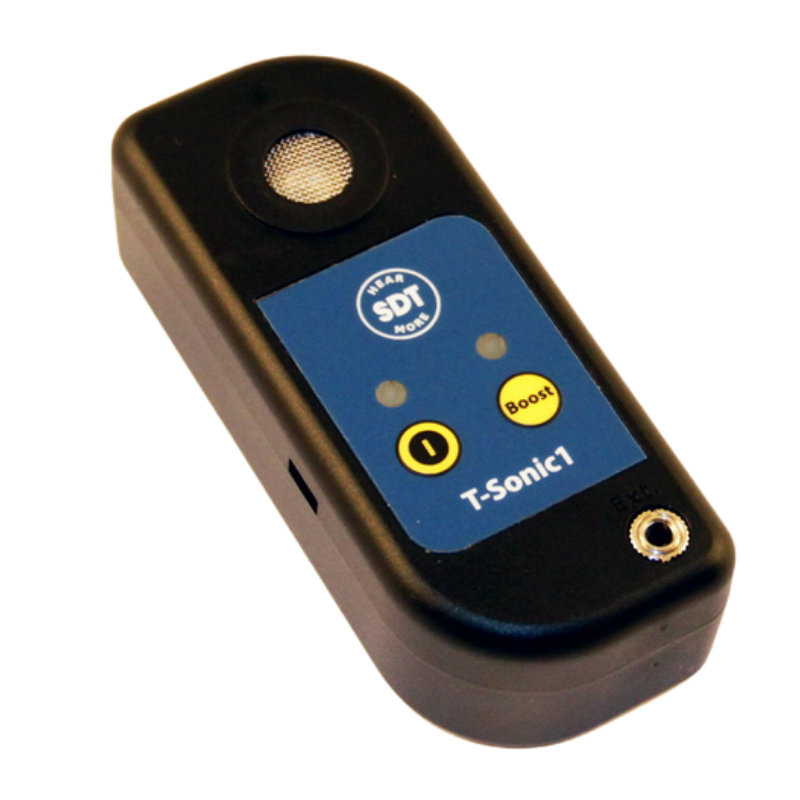
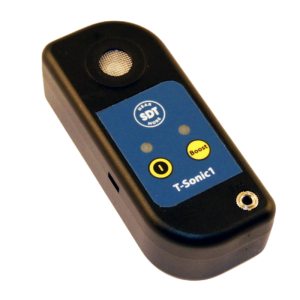
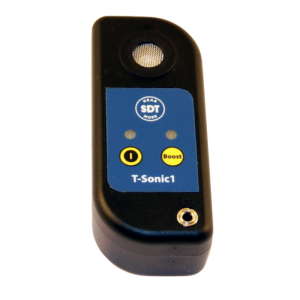
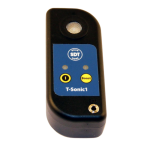
The T-SONIC1 by SDT Ultrasound Solutions is a lightweight, compact directional Bi-sonic ultrasound transmitter engineered for the tightness inspection of closed volumes and spaces that cannot be pressurized or depressurized. Used in combination with an ultrasound receiver like the SDT270 or SDT200, it emits dual frequencies to reliably check the integrity of doors, frames, windows, cold chambers, and fridges.
Giá: Liên hệ
The T-SONIC1 is a high-performance ultrasound transmitter designed to detect leaks and inspect tightness in medium-sized volumes where standard pressure variations are not possible. Featuring a single directional transducer, it generates ultrasonic signals that require an accompanying SDT receiver to perform localized acoustic testing.
Key features and specifications of the T-SONIC1 include:
-
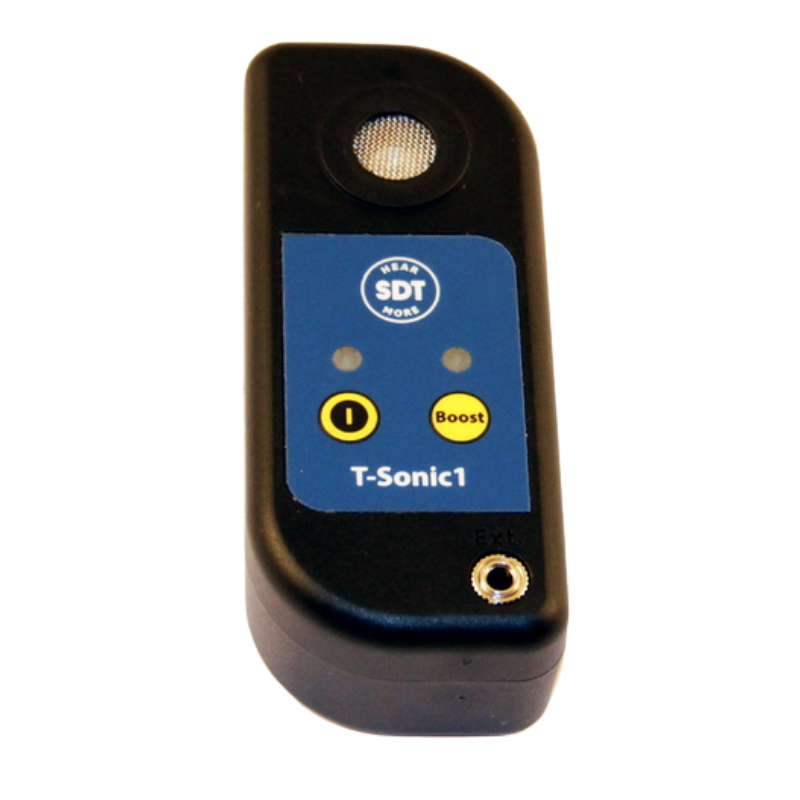
User-Friendly Interface: Operates simply using two control keys (“on/off” and “+20 dBμV boost”) along with two light indicators to monitor system status such as voltage and battery charge.
-
Dual-Frequency Output: Alternates between transmitter frequencies of 39.6 kHz and 39.9 kHz over an 80 ms vobulation period.
-
Boostable Sound Pressure: Delivers a transmitted Sound Pressure Level of 85 dB SPL at 100 cm under normal operation, which scales up to 105 dB SPL when the boost mode is activated.
-
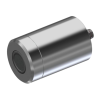
Extended Reach Capability: Includes a 3.5 mm jack connector for external transducers, allowing users to inspect narrow or difficult-to-access spaces like pipes or wall bases. Optional 16mm open and 18mm closed external transducers with 2.5m cables are available for this purpose.
-
Smart Power and Connectivity: Features a clever programming combination for automatic shutdown to conserve power, and a USB port to either power the device via a computer or update its embedded firmware.
-
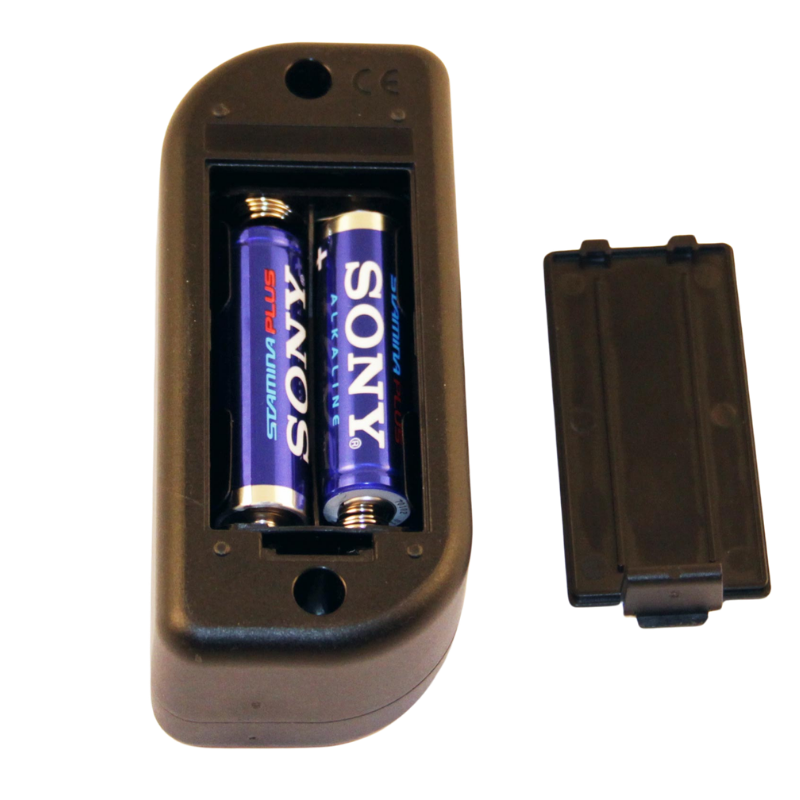
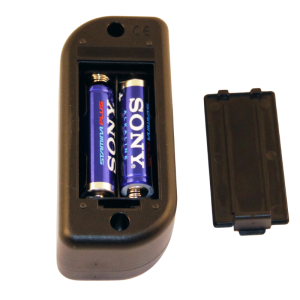
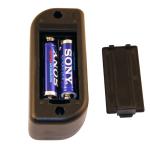
Physical and Environmental build: Enclosed in a robust Acrylonitrile Butadiene Styrene (ABS) housing with an IP30 rating, the unit weighs 122 g (4.3 oz) including its 2 AA batteries, supports up to 30 hours of alkaline battery autonomy, and operates within a temperature range of -10°C to +50°C (14°F to 122°F).

Hỗ trợ khách hàng 24/7

Bảo hành chính hãng

Miễn phí giao hàng

SẢN PHẨM LIÊN QUAN